Monday, 21 February 2011

Week 5 - Cusco, Peru

This week I completed the 4 day Inca Jungle trek which was both amazing and physically exhausting! 

The tour departed from Cusco at an early start of 6am on Tuesday and the first day consisted of cycling.  There were 10 people in my group and I think we had different ideas of what the cycling would entail with the majority of us believing the cycling would be through the jungle - completely wrong!  We ended up cycling down a road very similar to the Death Road in Bolivia for 3 hours - the only difference being the road was slightly wider and it was open to car traffic!  We started at the Abra de Malaga Pass at an altitude of 4,340 meters and cycled for 3 hours down to the small village of Santa Maria, at an altitude of 1,430 meters - so you can now fully appreciate why it´s known as the most popular long distance downhill descent by bike in Peru.  We were all fully kitted out with shin pads, elbow pads, and helmets and thorough checks were performed on each bike to ensure all the vital pieces were working, inlcuding the brakes which I made ample use of throughout those pretty terrifying 3 hours!  We had 2 tour guides, one leading the way and one at the back, throughout the entire bike ride.  The weather was freezing and it rained for the first 2 hours so a mixture of emotions were running through me at that point - one main one being regret, especially as my entire body was numb from the cold and I was drenched through from the rain.  The winding road had 90 degree bends in it every 2 minutes and I spent the majority of the time looking only at the road ahead as the 1,500 meter cliff drop over the edge was just too terrifying to contemplate!  And to make things just a tad bit more thrilling, we had to cycle through 10 rivers about a meter deep that cut accross the road.  The best technique to achieve a successful crossing involved peddling as fast as possible through the river - whilst I did try my hardest to take this on board I pretty much failed miserably each time and ended up stuck in the middle of each thus getting truly soaked!

After the 2 hour ordeal was over, we took a little break where I tried my best to thaw out, before we then embarked on the last hour leg of the journey - cycling along a dirt road.  And as you can very well imagine, I did end up finished caked from head to toe in mud!  What made it a little more interesting, and to be honest even more alarming was that there were landslides every so often along the dirt track and at one point I had some fairly sizeable rocks hurtling towards me on my right as I was frantically peddling for my life! What an unforgettable experience, and one I wish to never repeat!  Unfortunately I didn´t manage to take any photos in all the excitement so I am hoping my descriptions will be enough for you to picture, especially a very muddy, wet and shell shocked Alex at the end!

On day 2 of the tour we commenced our trek into the jungle.  It was another 6am start where we all had a hearty breakfast to prepare us for the day ahead.  We spent about 6 hours walking through the tropical rain forest which had about 2 hours worth of very steep uphill climbs.  It was a really enjoyable day, apart from the mosquitos and the sandflies which were literally in abundance! However my tropical spray from Boots with 50% deet worked a treat, and I was one of the lucky ones to escape with only a few bites, some people had about 50!  Halfway through our trek we reached the highest peak which used to be an old Inca trail, long out of use.  Here the group performed a ritual where we had to each hold three coca leaves and chant some inca dialect after our tour guide to bless our onward journey to Machu Picchu.  We then trekked all the way to another small village called Santa Teresa where we stayed the night.  That evening over dinner we were introduced to a very well known local tipple called Inca Tequilla.  After I was convinced by my tour guide that this bared no similarities whatsoever to normal tequilla apart from sharing the same name, the entire group downed a shot - it was absolutely vile!  That was the end of my very short relationship with inca tequila, a few in the group continued to drink shots through the night, despite fully knowing we had a 5:30am start the next day!


Trekking through the Rain Forest


Performing the Inca ritual

Day 3 of our trek started with a few sore heads, I think our guide funnily enough had the worst!  We continued walking through the rain forest for about an hour after which we then trekked along a railway track for the remainder of the way to Aguas Calientes.  The railway track is still used, but only at certain times in the morning and afternoon so we were able to freely walk along the tracks as we pleased, only moving out the way once for a train which was travelling at about 10 miles an hour so there was no risk of getting flattened!  The total journey was about 16 kilometers and took about 5 hours.  As soon as we reached our destination I headed for the hot springs to earn a well deserved soak.  We then had an early night as a 3:30am start beckoned us the next day to climb Machu Picchu, the ultimate and most anticiapted part of the trek.

Trekking along the railway track


Aguas Calientes

It was a slight struggle to get up on day 4, but our group managed it and soon we were on our way to the main gates for Machu Picchu at Puente Ruinas, where the road crosses the Rio Urubamba, 20 minutes walk from Aguas Calientes.  At 4am it was pitch black so we all had to use torches to guide our way.  When we arrived at the gates there was already a large queue of people, about 80 or so ahead of us.  The gates opened at 4:50am, and that is when the race to Machu Picchu began, and no joke! I am told there are 1,900 steps up the 2km climb to the second lot of gates for Machu Picchu - to be honest after about 10 minutes I stopped counting and focussed on the task of just getting there without falling over in the dark!  The reason why a lot of people opt to climb instead of take the 10 minute bus ride up to the second gates is to try and get a stamp to climb Wayna Picchu, a mountain behind the ruins of Machu Picchu.  Only 400 hundred people are permitted to climb this mountain every day and it boasts some of the best views of the ruins.  However, it involves an hour scramble up a very steep incline and is known to be extremely tough, I think 2 people have sadly died whilst climbing in the last 2 years.  Therefore the mad rush up the steps to Machu Picchu was for all those crazy people who wanted to ensure they got the well sought after stamp on their ticket to climb this popular mountain on a first come first served basis - this included me and 4 other people in my group.  I am proud to say that I reached the top of those steps in 38 minutes and got awarded the 7th stamp - those spinning classes clearly paid off! I must have overtaken about 70 people on my way up, some people in all their eagerness to get to the top had completely overexerted themselves at the outset and collapsed halfway up!

After I found my group and entered through the second lot of gates at 6am, we had a guided tour of the ruins for 2 hours.  The first sight of the ruins was simply breathtaking.  As it was still early there was a cloud of mist surrounding Machu Picchu which added to beauty by giving the entire site a mysterious and magical feel.  I have seen so many pictures however nothing compares to the complete awe and wonder you encounter as you make your way slowly through the ruins.  And also what looks so small in pictures is nothing compared to the reality.  The entire site is huge and seems to go on forever.  Our guide took us to the main points of interest where he explained the history behind the various temples and how the inca tribe were masters of their trade in stonework.  It´s completely extraordinary how they managed to carve and fit together the stones with such precision - something which no human or machinery could do today.   I think the photos below speak for themselves.

After the guided tour I actually decided against climbing Wayna Picchu (after all that morning´s effort!) and instead opted to climb to the peak of Machu Picchu with some of my group.  Our guide had advised us before that this climb would be rewarded with more spectacular views than Wayna Picchu and only 20 people or so climb it every day - this swayed it for me!  The climb took an hour, and after the morning´s feat it was a bit of a struggle to say the least, notwithstanding the fact that it started raining heavily as soon as we started!  The climb involved another lot of steps, this set much steeper than those in the morning, and towards the top a lot of them were very unstable.  By the time I reached the top completely and utterly frazzled of any energy, the mist had descended so heavily over Machu Picchu that all I was rewarded with was a view of thick white cloud! However, it was still an achievement to reach the peak in any case and I only stuck around for 5 minutes before heading back down which was turned out to be an even bigger adventure than the climb as the heavy rain had made the steps extremely slippery.  And yes, I am sure you are all no doubt not surprised by the fact that I did manage to spectacularly fall down on my stumbling and wobbly descent!  Thankfully no major injuries, just some very painful scrapes and cuts!

After some further exploring of the ruins we all headed back to Aguas Calientes exhausted but thoroughly satisfied with the amazing day we had experienced.  We all headed back to Cusco that evening by train to Ollyataytambo and then taxi for the remaining journey.  The next day I treated myself to a very well deserved massage!


Machu Picchu


Terraced fields


Residential section of Machu Picchu


Residential section of Machu Picchu


Temple of the Sun


Temple of the Three Windows


Chinchilla


Llama


Monday, 14 February 2011

Week 4 - La Paz & Copacabana, Bolivia and Cuzco, Peru

On Monday my last day in La Paz was spent visiting Chacaltaya mountain and Moon Valley.  Chacaltaya is a mountain in the Cordilleras, a range of the Bolivian Andes.  It has an altitude of 5,401 meters and used to serve as a major ski resort in Bolivia before the glacier melted in 2009.  The bus drove us all the way to 5,300 meters thus skipping a lot of the hard work (!) and we then walked the last 100 meters which was pretty tough, especially in the hail storm that started as soon as we stepped out of the bus!  It was freezing and most of the climb up was trudging through snow and ice but it only took about 40 minutes and took the photo for evidence before making a hasty return to the bus!


Chacaltaya Mountain

We then visited Valle de La Luna (Moon Valley) in the afternoon just 10 kilometers outside of La Paz.  It is an amazing rocky landscape with all different and unusual rock formations which have been formed through thousands of years of erosion.  We walked a 45 minute trail through the valley and saw a lot of rock formations that are named after what they resemble such as Madre Luna (Mother Moon) and El Sombrero de la Dama (The Woman´s Hat).  The surrounding scenery was beautiful and the fact that the sun was shining meant I could recover from the morning´s cold spell!


Moon Valley

On Tuesday I travelled to Copacabana by Lake Titicaca, north of La Paz.  The journey took about 5 hours by bus and also involved crossing part of the lake by boat for 20 minutes - this amounted to as little as 4 pounds, bargain!  Copacabana is a small town sitting right by Lake Titicaca with a altitude of 3,800 meters.  It is a tranquil and relaxed place where a lot of hippies seem to set up camp, however it did feel a tad on the touristy side.  Its main significance is it provides the gateway to Isla del Sol, an island in the middle of Lake Tititcaca.  On arriving to Copacabana I wondered around the town which took all of an hour, and then commenced a small hike up Cerro Calvario, a hill just north of the town.  I have to admit I did have a few pitt stops to catch my breath on the way up as it was pretty steep!  The views at the top were amazing so it was well worth the climb!

Copacabana

One very famous and slighlty bizarre ritual in Copacabana is the blessing of the cars, ´Benedicion de Movildades´, which occurs daily at 10am and 2.30pm outside the cathedral in the main square.  The owners decorate the cars (in this case mostly mini vans as this seems to be the most common form of transport) with flowers, coloured ribbons and flags.  During the ritual alcohol is poured over the vehicles and a blessing is performed by the priest asking for protection and safe journeys on the roads. 


Blessing of the cars!

On Thursday I went on a day trip to visit Isla del Sol.  Several boats leave every morning at 8.30am and it was easy to just buy your ticket from the port for 2 pounds.  The journey lasts 2.5 hours to get to the north of the island in a pretty uncomfortable boat so was relieved when we finally approached shore at 11am.  As soon as I stepped foot on the island the weather which has previously been windy and rainy suddenly changed to clear blue skies and bright sun - I could then fully appreciate why it´s called island of the sun!  There were hundreds of tourists doing the day trip like me, and we all trekked about an hour to the tip of the north part of the island to see some ancient inca ruins and the site of the sacred rock where the Inca creation legend began.  After this, I commenced the supposedly 3 hour walk to the south of the island where I had to catch the last boat back to Copacabana at 4pm.  What I didn´t encounter was getting lost several times and also climbing up a large amount of steep hills - I managed to make the 4pm boat just, however turned up looking a complete wreck with scrapes all down my legs and a bloody elbow from falling over in my rush to make the last boat!


Isla del Sol


Ruins on Isla del Sol
 On Friday I sadly left Bolivia and excitedly made my way to Cuzco, Peru.  However my excitement soon evaporated on discovering that the bus journey would take 12 hours - and I managed to miss out on booking a ´cama´seat which means you can fully recline your seat so you can actually have a nice comfortable sleep during the journey.  Needless to say the journey was not a pleasant experience and was never so relieved to finally arrive in Cuzco at 9pm.  I have now learned the valuable lesson to book my bus journeys in advance!

Cuzco is a great city and thousands of tourists every year make a beeline for it during their travels in Peru - I was informed on average 10,000 tourists visit Cuzco every day.  After just spending a couple of hours walking around I fell in love with it.  It is such a charming and beautiful city, rich with so much inca history and Andean culture.  To the north of the city around Plaza San Blas there are narrow cobblestone streets with huge inca built walls which are so impressive to see.  It is Peru´s oldest city and is where the Inca Empire developed thus making it the most important archaelogical site in South America - not withstanding the fact that it is of course the home of the very famous Machu Picchu.  The people are all very friendly though I have never been asked to have a massage so many times in my life - literally every corner you turn I get pounced on!


Plaza de Armas


On Sunday I went a day trip to the Sacred Valley where former Inca pueblos reside and thus some amazing ruins.  I first visited Pisac, a small colonial village 33 kilometers northeast of Cuzco.   There I saw some spectacular ruins on the top of the hill which are rated second to Machu Picchu.  The terraces which sweep through the mountains are simply breathtaking.  The main purpose of these terraces was to prevent erosion for agricultural preservation.  I spent about 45 minutes hiking up the hill and taking in the beautiful scenery.  I then went to Ollantaytambo, where a massive Inca fortress resides, another yet amazing piece of Inca history that has managed to remain so well preserved.  The fortress is shaped like a llama with terraces that are larger than anywhere else in the valley.  I hiked up the left side, the front of the llama, walked along the top and then climbed down the right side - seeing stones fitted with such precision is truly amazing, and a complete mystery as to how they managed to move the large stones all the way from the quarry hight up on the oppsoite side of the Urubanba river - leaves you in complete awe.  All I can say is I eagerly await my 4 day cycling and trekking trip to Machu Picchu next week!

Ruins at Pisac

Pisac

Ruins at Ollantaytambo

Ruins at Ollantaytambo

Tuesday, 8 February 2011

Week 3 - Sucre & La Paz, Bolivia

My last week in Sucre has flown by at incredible speed, I can´t believe my 3 weeks are already over. 

The city has been crazily busy this week with students on mass everywhere and roads swamped with traffic.  I actually missed the nice tranquility of the pervious two weeks.  The weather took a slight turn for the worse this week with quite a lot of thunderstorms, rain and wind which I am guessing is pretty similar to weather in England right now so you can stop feeling so jealous!  On the water balloon front, I managed to escape yet again from any public soakings this week, however a friend of mine from the Spanish school wasn´t graced with the same luck.  As we were walking to class one afternoon deep in conversation and oblivious to the world around us, out of nowhere a car swung around the corner and a huge watergun met our astonished eyes.  There was literally no time to react before my friend was ruthlessly gunned down with water all down her front, it didn´t make matters any better that she was wearing a white top!  I am amazed at how lucky I have been, but Carnaval is still another 4 weeks away so I shouldn´t speak too soon!

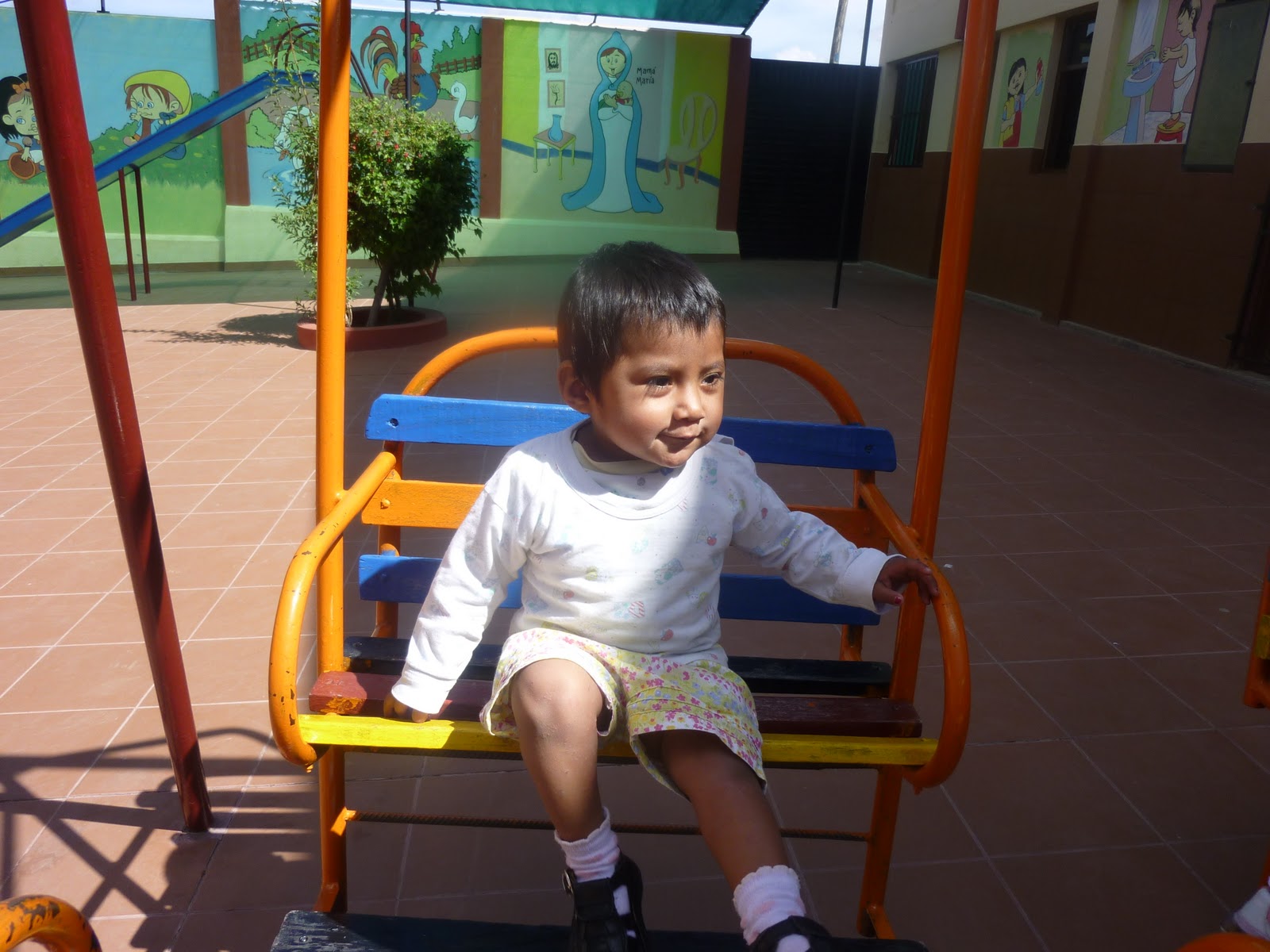
My last week at the orphanage was spent with the same group of children aged 3 to 6 years old.  A few more volunteers turned up this week so I managed to avoid the unfortunate situtations where 10 children were clambering all over me at the same time!  The majority of the staff at the orphanage are volunteers and you can visibly see that the full time staff really do appreciate the help.  Not only is it really rewarding from a volunteers point of view, you can also really feel like you are making a valuable contribution and a difference to the children´s lives each time you work there.  I have grown so fond of the children, despite their often very naughty ways(!), and I felt very sad to leave them on my last day.  I really hope that all of these children find a nice home one day as they deserve a happy future with a loving family. 

Cluadia & Letti

Jocelyn


Millie
Daniella

I finished my second week of Spanish lessons and am very proud to have receievd a diploma to mark the occasion.  This week lessons focussed on a lot of grammar and conversation, but we also kept it a bit more light hearted with watching a spanish movie and singing along to some local Bolivian songs in spanish!  Although I am by no means anywhere near fluent, I do feel I understand a lot more and can make small conversation supplemented by a lot of sign language! 

On Staurday morning I sadly left Sucre and headed to La paz.  I decided to opt out of the 15 hour bus journey and take the 45 minute plane journey instead, which I may add was only 40 pounds more and a lot more comfortable!  La Paz is quite a crazy city and completely different from Sucre.  My first glimpse of it was driving in the taxi from El Alto airport and it completely took my breath away.  People often describe La Paz as a city that sits in a bowl, and from the picture below you can understand why.  It sits in a canyon surrounded by the Andean mountains with houses clinging on the the sides, it is truly spectacular to see.  It is the second largest city in Bolivia, after Santa Cruz, and sits at an altitude of 3,660 metres, making it the highest capital city in the world. 


La Paz


My first day in La Paz was spent familiarising myself with the complete chaos that permeates the city as well as adjusting to the altitude.  There are numerous roads with quite steep hills and it was a battle to walk up without feeling physically wrecked!  The traffic is a complete maze of cars, although there are some traffic lights, cars seems to drive out from all directions and miraculously weave in and out without a single scrape or head on collision.  There are markets littered all along the sides of the streets, selling anything and everything such as clothes, crockery, and food.  There is one very popular market called ´Mercado de Hechiceria´, which translates as the ´Witches´ Market´ and as you can imgaine this sells very peculiar items such as shrivelled llama fetuses!  The city is completely enchanting and you can easliy get enraptured with the hustle and bustle of the small little cobbled side streets and the quirky shops and inhabitants. 

There are two main attractions that sprung to my mind on visiting La Paz, both of which I won´t be paying a visit and for very good reasons!  One is Él Camino de La Muerte´, otherwise more popularly known as ´Death Road´.  This road was famously awarded the title ´The World´s Most Dangerous road´ by the Inter American Development Bank in 1995 due to the sheer volume of deaths from road accidents each year.  This road is one of the few routes connecting La Paz to the Aamazon rainforest, and is about 3 meters wide with a vertical drop of over 1,500 meters and no guardrails, so you can imagine how terrifying it must be to drive accross.  It is estimated that there were on average 250 deaths a year, the biggest one being in 1983 when a bus veered off the side killing more than 100 passengers making it Bolivia´s worst road accident in history.   A new road was built in 2007 bypassing one of the worst sections of the Death Road, however there are still accidents reported every year.  The reason why this has become a major tourist attraction is due to the introduction of the La Cumbre to Coroico mountain bike excursion which gives crazy minded tourists the opportunity to cycle down the death road, which is now almost exclusively used for cyclists.  Since 2007 18 tourists are reported to have died whilst cycling this route, the majority due to idiotic and careless behaviour from thrill seekers who are over confident and take risks, other due to poor quality of bikes provided by the tour companies.  Although I do like my fair share of adventure sports, nothing would ever tempt me to cycle the ´Death Road´.  I think you would have to be completely insane! 

The second popular attraction is the San Pedro prison.  Not all may have heard of this quite well known prison, the reason it became famous and how I have heard if it is through reading a book called ´Marching Powder´.  The book tells the real life story of Thomas McFadden, a British man who got caught for drug trafficking cocaine in La Paz airport in 1995.  Thomas became very well known for offering prison tours throughout his 5 year sentence in the prison - it was one of the main reasons he survived this long spell.  This prison is not like any normal prison - inside the four walls it is renouned for being a society within itself i.e. the prison has its own economy and community like the outside world and it seems like the inmates generally run the place with guards only present on the outside to ensure prisoners do not escape.  In order to survive, prisoners have to earn a living in the prison by setting up shops and they also have to rent or purchase a cell as these do not come automatically!   There is a distinct rich poor divide where some prisoners lead a lavish lifestyle with large cells that can house their families and others that cannot even afford a cell so sleep in the courtyard.  San Pedro prison is also the base for the largest cocaine factory in Bolivia.  During these prison tours it bemae very well known that tourists were offered cocaine, another way for the inmates to make some unofficial income.  This bizarre and corrupt world became so exposed to tourists that it was closed down for tours last November, which I can only conclude is a good thing as I think people seem to forget that this is a prison with some dangerous inmates and once inside who knows what danger you could be faced with. 


On Sunday I went on a day trip to Tiwanaku which is a famous Pre-Columbian archaelogical site 72km from La Paz.  The Tiwanaku civilisation are reported to have been pre the Inca era, from roughly 600 BC to AD 1200.  We viewed a number of megaliths all over the site but I have heard that the Inca sites in Peru are more impressive so will hold out on some pictures until then. 

Monday, 31 January 2011

Week 2 - Sucre & Potosi, Bolivia

Another week in Sucre has passed somewhat quite swiftly and can´t believe I only have one more week here left - must be a good sign!

It has been really easy to settle into daily life in Sucre.  I have become very familiar with many parts of the city through walking everywhere which has the added bonus of ensuring some much needed exercise!  Every one moves at a much slower pace than back home, but I find that quite appealing.  The people are generally friendly and accommodating, especially when asking for directions which I have resorted to on a number of occasions! One very noticeable thing which hits you almost immediately whilst exploring the city by foot is the number of dogs - they are everywhere!  Dogs of all shapes and sizes lie in doorways of shops and houses, and I often see them taking an afternoon nap on pavements, the middle of rounderbouts and even in internet cafes!   They cross the roads infront of oncoming traffic and cars literally stop to let them pass -  they seem to own the city!  Although from first impressions these dogs look homeless, they certainly look very well fed so I assume they must have owners - I am just amazed at the pure volume of them roaming the streets. 

Sucre has come alive in the last week as the students have started to pour in from other parts of Bolivia to commence school or university.  This has also had a rather unfavourable knock on effect on the amount of water balloon activity! However I have been luckier this week and have only experienced 3 near misses, I guess you could say I have become very good at spotting the culprits well in advance! In addition to water balloons, water guns seems very popular and as I was walking with some friends to the park on Saturday, one girl in my group got spectacularly ambushed by two young boys and was drenched from head to toe.  I can only put my dry state down to the fact that I am not blonde!

This week I moved to a different orphanage called Hogar Tata Juan de Dios.  This orphanage is located in the centre of Sucre and homes about 40 children between the ages of 1 month old to about 6 years old who have been abandoned by their parents or are waiting to be adopted.   The regular full-time staff consists of religious nuns and other local professionals.  The orphanage is very well maintained and the facilities are in very good condition.  I am currently looking after children aged 3 to 6 years old therefore have successfully avoided nappy changing so far!!  I spend the mornings playing with the children, either indoors with toys or outside in the playground when it´s sunny weather.  The children are all very sweet and some of them tend to call me ´mama´ and no amount of gentle persuasion seems to convince them otherwise so the name has stuck! 

The children all seem very happy at the orphanage and adore any kind of attention - they can often be quite demanding at times!  On occasions I have had about 4 or 5 climbing all over me so as you can imagine it can be physically exhausting!  I also help to feed them at lunchtime, especially the smaller kids who have not yet mastered the art of aiming their spoon directly into their mouths.   This can often end up with food all over the floor instead of in their stomachs! After lunch, the children tend to play for another half an hour and then I help put them to bed for their afternoon siesta.  I have really enjoyed volunteering at this orphanage, and I think I may end up going there again next week.  The staff there are all very friendly and I have slowly been picking up some spanish words here and there, though spending the majority of time with the children hasn´t lent itself to extending my vocabulary much!


This week I also started my spanish lessons at L´Academie Latin America in the afternoons which have been excellent.  I was in a group of 4 and each day we had 4 hours of grammar and conversation.  One afternoon our teacher told us to go out to the sqaure, Plaza de Mayo, and interview locals on the history of Sucre which was an interesting experience!  Although my spanish is improving day by day, understanding the strong accents of the locals can be quite difficult.  However it was a great way to practice conversation and some of the people I interviewed found my flustered and broken spanish quite amusing.

On the weekend I went to visit Potosi, a 3 hour bus journey from Sucre which amounted to 2 pounds - I am still amazed at how cheap everything here is in Bolivia.  I went there for one main reason; to visit one of the most famous mining towns in world history. 

Potosi is the world´s highest city with an altitude of 4,090 meters.  It was founded in 1545 following the discovery of silver ore in the Cerro Rico mountain (Cerro Rico means rich mountain in Spanish).  Potosi has significant historical importance due to the enormous volumes of silver it supplied the Spanish during the period when Spain were building their vast empire.  Between  1556 and 1783 45,000 tonnes of pure silver is reported to have been mined.   It was during this time that Potosi was renouned for being one of the wealthiest mining towns in the world, and the wealthiest city in the whole of Latin America.  During the mining tour I took,  a guide told us that the amount of silver extracted from the mountain was enough to build a bridge all the way from South America to Spain, and then followed on by saying that the same bridge could have been built using the bones of all the miners who died during that period which was approximately 16 million people.  The majority of the miners were imported African slaves or indigenous people from the Bolivian countryside who were forced to work in terrible conditions, working 18 hour days with no food.  The brutal treatment of these miners meant they often only lasted about 2 months before dying of exhaustion and starvation. 


Potosi - View from Cerro Rico

The silver became depleted in 1800 leading to the swift economic decline of Potosi.  Today the Cerro Rico mountain continues to be mined for minerals such as zinc and sica but often this is not a very lucrative income for the miners as locating the minerals can be pretty much hit and miss, and on days where no minerals are found the miners take home no income.   Approximately 9,000 people work in the mines of Cerro Rico, amongst them hundreds of children.   


The city is now a former shadow of its once prosperous existence, and this was clearly visible as the bus approached the centre.  Crumbling buildings, unmade roads, an unused railway line and much poverty greeted us.  I could immediately feel the thin air as I descended from the bus, however it was only when I started walking a few meters that I actually felt out of breath for the first time since being in Bolivia.  I arrived at a hostel where I booked a tour of the Candelaria mine amounting to just 100 Bolivianos (10 pounds).  The tour started in an hour so together with a friend, I went into the city centre to have lunch, known as ´almuerzo´.  In Bolivia, almuerzo is the main meal of the day and consists of 4 courses; a small starter, soup, main dish and dessert.  This huge feast amounts to a small cost of 12 Bolivianos, just over a pound.  All I can say is that after the soup I could barely manage another mouthful! Feeling stuffed to the brim we went to start our tour. 

After being fitted with very flattering miners tousers, jacket, helmet and boots the tour started with a visit to the miners market.  This is where miners go to get their daily supplies of dynamite, cocoa leaves, alcohol and cigarettes - the absolute nessecities for a typical Bolivian miner.  It is customary to give the miners gifts, so collectively the people in my group bought several sticks of dynamite , cigarettes and soft drinks.  One stick of dynamite cost 10 Bolivianos - about 1 pound.  I don´t think there is any such place in the world where you can just freely buy dynamite and at such a cheap price! The alcohol the miners like to enjoy whilst working in the mine is 95%, one person in our group bravely volunteered to try it and it was evident from his spluttering red face that it wasn´t a very pleasant experience!  The cocoa leaves are part of the essential diet of a miner whilst working.  Chewing the leaves helps to depress hunger and also ensures the miners remain alert throughout their shift.  I tried a couple but found the taste pretty appalling and ended up spitting them out after a few minutes! Maybe it would get better with more practice, however I have no idea how the miners get used to chewing these leaves day by day with no other form of substinence in the mine.   


All kitted out for the mine!

We then progressed to the Candelaria mine for what I can only describe as the most terrifying 2 hours of my life!  On entering the mine, we followed the guide for about 400 meters through a large tunnel where we were able to easily walk upright, only ducking our head occasionally where the ceiling dipped.   

Miner entering Candelaria mine

First 400 meters
 We then arrived at the Tio, still on the first level of the mine.  Every mine in the Cerro Rico mountain has a shrine to ´El Tio´, which is a representation of the god of the underworld.  The miners lay offerings at the foot of the shrine such as cocoa leaves and cigarettes and ask the Tio to bless them whilst they work in the mine. 


Tio

After visiting the Tio our guide informed us that the Candelaria mine has 4 levels and we would be visitng each during our tour - this was news to me! Slightly apprehensive, we continued our journey and descended a few meters by scrambling through much smaller tunnels.  At some points we were crawling on our hands and knees, and where it got very narrow and steep I adopted the sliding technique which is pretty self explanatory! The dust got worse as we descended each level and I found it increasingly hard to breathe, at some points bordering on suffocating.  This is definitely not for the claustrophobic types!  There were certain times during the 2 hours that I felt my panic rising and I had to continue to take deep breaths to calm myself down - it really was a scary experience, but at the same time hugely fascinating which is probably why I never opted to go back up to the surface at any time during the tour. 

Crawling through to Level 3
Climbing down to Level 4
When we finally made it to the 4th level, we met a miner and watched him for twenty minutes whilst he worked.  He was creating a hole with a hammer and chisel in order to lodge a stick of dynamite.  He explained this task would take him 2 hours.  This miner was aged 39 years old, which is a notably long life for a miner.   The average life expectancy of a miner is about 45 years of age.  This is largely due to the fatal ´Silicosis´ disease they contract over years of working in the mine.   Silicosis is often referred to as the ´black lung disease´ and is brought on by all the dust the miner is subjected to over many years.  Once a miner contracts silicosis, he has only months to live and towards the end of his life spends a lot of time coughing up blood. 

Miner at work on Level 4
We then progressed back up to Level 3 where we saw miners pushing huge carts full of the minerals they had collected.  The carts weigh about 10 tonnes when full, so I can imagine it´s physically exhausting work. 

Miners pulling a cart

Cart full of minerals

When we finally surfaced I have never felt such a wave of relief pass through my entire body! I was covered in dust and couldn´t believe breathing in gasps of fresh air could be so gratifying, even if somewhat difficult given the altitude.  I can only begin to imagine what it must be like to work constant 12 hour days in the mines, it really made me appreciate and get a better understanding of the appalling conditions the miners endure.  And the sad thing is that many of these miners have no other option as for them the only way to make a reasonable living to support their families and survive in Potosi is to work in the mines.  This is even with the knowledge that they most probably won´t live past 45-50, however they seem to readily accept this - I am not sure how, what a completely different world. 

Sunday, 23 January 2011

Week 1 - Sucre, Bolivia

My first week in Bolivia is drawing to a close and it´s been pretty eventful to say the least!  After a 36 hour journey from Heathrow (3 flights, a 6 hour wait Miami airport, and an 8 hour wait in La Paz) I finally landed in Sucre, the former capital of Bolivia.  Sucre is located south of La Paz and has an altitude of 2,750m, so not as high as La Paz which is 3,660m.  So far the altitude hasn´t affected me so much apart from some mild headaches here and there.  Sucre, is the 5th largest city in Bolivia and still remains the constititional capital.  It is famous for its architecture of white washed colonial buildings with red tiles and is rich with history dating back to 1538.  It is full of museums and universities, and reflects a lot of the indigenous culture of Bolivia.  In the week that I have been here I have pretty much walked from one end of the city to the other, its not too big, but not too small either.  It has a lovely sqaure in the centre called Plaza de Mayo where all the locals tend to gather during lunch and in the evenings, and you also get a lot of shoe shine boys and beggars.  There is poverty in Sucre but it is not hugely visible.  There are a lot of wealthy students here who have come from La Paz and other areas, and a lot of professionals in the city centre.  However, once you start to get to the outskirts the city becomes a lot poorer, with a lot of run down houses and unmade roads. 
Sucre

Plaza de Mayo
On my arrival I got taken to the flat which I am sharing with other volunteers during my 3 weeks.  I was actually surprised at the good condition of the flat, it´s fairly large with 6 bedrooms, 2 kitchens and 2 lounge areas, and was very clean and well equipped.  I am currently sharing with 3 Danes (2 boys and 1 girl), a Swedish girl and a Japanese guy.  They are all a bit younger than me but are friendly and there haven´t been any frictions so far, well apart from one late night party which consisted of the flat being taken over by about 20 Danes until 2am!!!

My voluntary work started on Tuesday, and for the first week I volunteered at an orphanage/hospital for handicapped children.  I found the whole experience very challenging and a complete eye opener, but it was extremely rewarding.  The children were aged from about 2 to 8, and had various forms of physical or mental disability.  The majority of my work consisted of playing with the children and helping to feed them at lunch.  The difficult part was trying to connect with the children, particularly as my spanish is still very limited at the moment and often it was difficult to understand them.   However, it wasn´t very hard to put a smile on their faces once I got to know them, and they became familiar with me.  Apart from a few tantrums, some hair pulling, and food being thrown over me they were very sweet children and I was glad to be able to make their day for a few hours.  Next week I am moving to another orphanage which is for very small children ages 0-2 so that will be a completely different challenge altogether, and from what I am told involves a lot of nappy changing!!!


Juan Diegos Orphanage
Although Carnaval is not until March in South America, the people of Sucre tend to start their preparations quite early, and that involves a lot of water throwing! I was completely oblivious to this until I got smacked in the leg by a huge water balloon whilst walking by la Plaza de Mayo on Thursday afternoon.  It took me completely by surprise and managed to drench me all over!  Apparently water balloons figure prominently in the build up to and during the Carnaval and this is the norm for Sucre at this time of year.  The Swedish girl I live with informed me when she lived here for a month 2 years ago she would get hit by water balloons on average 6 times a day!  So I am now on my guard, and constantly awaiting another attack soon, apparently they like to aim at tourists and women, so I am a very likely target. 

On Saturday I went on a hike, called the Chataquilla trail, which was a 1 hour drive from Sucre.  The trail is 600 years old, dates pre inca era and covers a distance of approximately 6 km ascending from valley of Chaunaca to summit of the mountains of Chataquila.  It took about 2 hours to complete.   The scenery was breathtaking and the weather was beautiful  - a sunny and warm day which made the hike really enjoyable.  It was largely downhill and fairly easy. 


Chataquilla Trail

After the hike we visited a village called Potolo which is famous for its beautiful textiles.    The village is very poor with the main employment being farming and weaving.  We visited a couple of the houses and watched the women weaving which was fascinating.  It takes them up to 3 months to weave just one piece the size of a doormat, and that´s working 8 hours a day!   Each piece of weaving cost about 60 pounds which seemed a lot given the size (plus not exactly too sure what its main use would be) however once told of the amount of work that is put in to each item, and seeing the intricate design and the careful attention to detail, it seemed to me that such hard work isn´t justly rewarded.  These women were amazingly talented. 

Potolo

There was a very friendly American couple on the tour who helped translate what the guide was saying in spanish, although I am improving day by day I still have a long way to go before my spanish is up to a good level.  The American couple are attending the spanish school which I have signed up to for 2 weeks starting on Monday.  I will be having lessons every afternoon for 4 hours after my voluntary work, hopefully should be a pro in no time!

Today I went to Tarabuco, a village about an hour and a half drive from Sucre.  Tarabuco has one of the oldest indigenous cultures in Bolivia and has a huge traditonal market every sunday which largely consists of handicrafts and weavings.  It´s quite touristy so an easy prey for beggars and scammers, however the prices seemed really resonable and ended up buying a jumper, a bag and a purse all for 18 pounds which I was very pleased with!

Tarabuco Market

All in all my first week in Bolivia has been really interesting and an amazing experience which is a complete different world from home.  Whilst it has often been tough in terms of the major cultural differences and language barrier, I have really learned a lot through volunteering and I think it´s an excellent way to engage with the local people and get a better understanding of their local customs and history.  I look forward to what the next 2 weeks bring!